Long before babies say their first words, they are already responding to music. Many parents notice that infants calm down when they hear a lullaby, smile when a familiar song plays, or move their bodies to rhythmic sounds.
These reactions are not accidental. Research shows that babies are naturally sensitive to rhythm, melody, and sound patterns from a very early age. In fact, the human brain begins processing musical elements even before language fully develops.
Music becomes one of the first ways babies interact with the world around them. Through rhythm, tone, and repetition, music helps stimulate early brain development and supports important communication skills.
The Early Connection Between Music and the Brain
From the earliest stages of life, the brain is highly responsive to sound. Even before birth, babies can hear muffled sounds and rhythms from the outside world.
After birth, music becomes a powerful stimulus that helps organize the brain’s processing of sound and movement. When babies listen to music, several areas of the brain activate simultaneously, including regions connected to hearing, memory, movement, and emotion.
Because music involves patterns and repetition, it helps the brain begin recognizing structure in sound. These early experiences play an important role in preparing the brain for later language development.
Why Babies Respond to Rhythm
One of the first musical elements babies respond to is rhythm. Rhythmic patterns are familiar and comforting because they resemble natural sounds babies experience early in life.
For example, the steady beat of a song can resemble a heartbeat, which babies hear constantly before birth. This familiarity often explains why rhythmic music can soothe infants and capture their attention.
You may notice babies reacting to rhythm in simple ways, such as:
- Moving their arms or legs when music plays
- Smiling or vocalizing during songs
- Calming down when hearing steady, repetitive sounds
- Paying close attention to musical patterns
These responses show that babies are not just hearing music. They are actively processing rhythm and engaging with it.
Music and Early Language Development
Music and language share many similarities. Both rely on patterns, pitch changes, rhythm, and timing. Because of this, musical exposure can support the early stages of language learning.
Songs naturally exaggerate sounds, syllables, and patterns, which helps babies recognize differences between tones and words. Repetition in songs also helps strengthen memory and listening skills.
Over time, these musical experiences support abilities that later contribute to speech and communication.
Music helps babies:
- Recognize patterns in sound
- Strengthen listening and attention
- Develop early auditory processing skills
- Build memory for sounds and sequences
These early skills lay the foundation for language development as babies grow.
Why Singing to Babies Is So Powerful
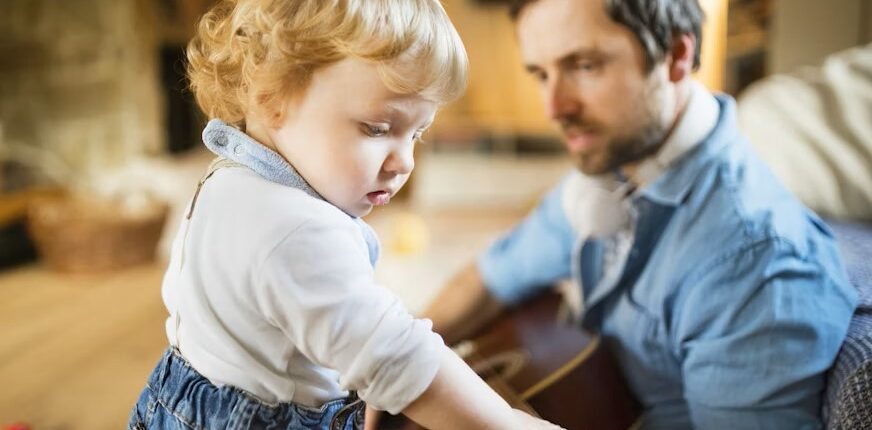
One of the simplest and most effective ways to introduce music to babies is through singing. A parent’s voice is familiar, comforting, and emotionally meaningful.
When adults sing to babies, they combine music with facial expressions, movement, and interaction. This creates a rich sensory experience that supports emotional bonding and communication.
Singing can help babies feel calm, safe, and connected. It also introduces rhythm, melody, and language in a natural and playful way.
Even simple songs, lullabies, or gentle humming can create meaningful musical experiences during early development.
Music as One of a Baby’s First Forms of Communication
Before babies can speak, they communicate through sound, rhythm, and movement. Music becomes an early bridge between emotion and expression.
Babies may respond to music with cooing sounds, laughter, body movement, or attentive listening. These reactions show that music helps them explore sound and interaction with others.
Through music, babies begin to learn that sounds can carry emotion, meaning, and connection.
Music as a First Musical Experience
Introducing music in the early stages of life can be a wonderful way to support a baby’s development while creating meaningful moments between parents and their child. Simple activities such as singing lullabies, gently moving to music, or clapping along to rhythms can transform everyday routines into playful musical experiences.
Music does not need to be complex to make an impact. What matters most is the interaction, repetition, and joy that come from sharing sound and rhythm together. These early experiences help babies become familiar with musical patterns while strengthening emotional connections.
At 123 Rock School of Music, music is seen as a creative language that can be introduced from the earliest stages of life. Early exposure to rhythm and melody encourages listening skills, curiosity, and imagination, helping children develop a natural relationship with music.
Sometimes a lifelong connection with music begins with something as simple as a song shared between parent and child.