Learning to play a song can be an exciting milestone for a young musician.
There is something motivating about recognizing a song you love and being able to play part of it yourself. For many students, a favorite song is the reason they become interested in an instrument in the first place.
But playing songs is only one part of learning music.
A well-rounded musical education can also help students understand what they are playing, hear musical patterns, develop technique, make creative decisions, and eventually create music of their own.
That doesn’t mean songs should be replaced with exercises or theory.
Instead, songs can become a starting point for deeper musical learning.
At 123 Rock School of Music, students can connect the music they enjoy with skills such as theory, technique, ear training, sight-reading, improvisation, and composition. The goal is to help students develop as musicians while keeping their personal musical interests part of the experience.
So what does learning music look like beyond simply learning songs?
Playing a Song Is a Great Starting Point
Familiar music can make learning feel meaningful
When a student wants to learn a particular song, there is already a reason to engage.
They may love the artist, recognize the melody, enjoy the rhythm, or simply want to be able to play something they hear regularly.
That motivation can be valuable.
A song can provide opportunities to work on:
- Rhythm and timing
- Melody
- Chords
- Technique
- Dynamics
- Musical phrasing
- Song structure
- Listening skills
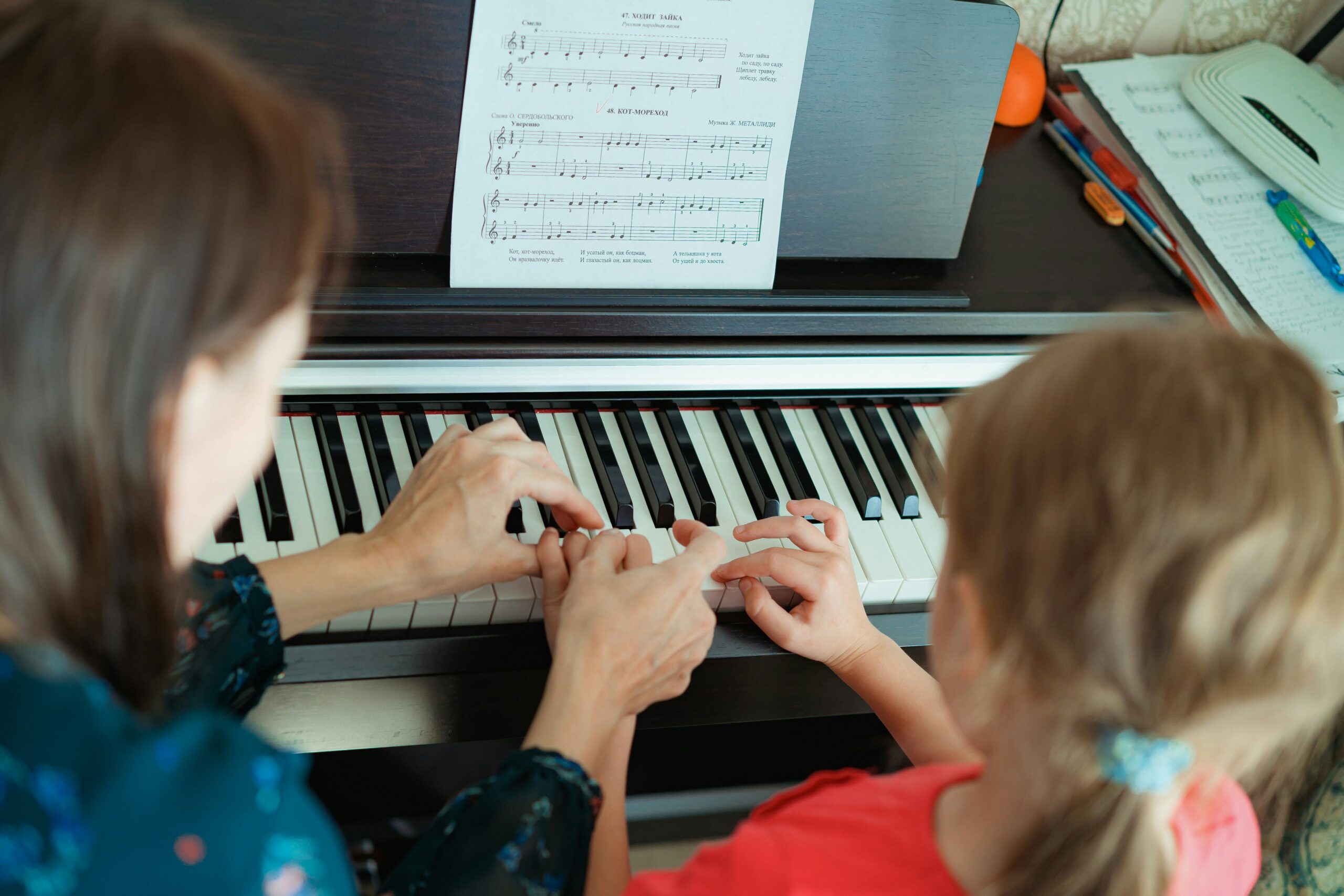
For example, learning a guitar song may involve practicing chord changes and rhythm patterns. A piano student might explore the melody, harmony, and accompaniment. A singer can work on pitch, phrasing, breath, and expression.
The song gives the student something concrete to work toward.
But once they can play it, there is another question worth asking:
Do they understand what they are playing?
That is where a broader musical education begins.
Music Theory Helps Students Understand What They Play
From memorizing patterns to recognizing how music works
Students don’t need to become music theorists to benefit from understanding basic musical concepts.
Theory gives names and relationships to things students are already hearing and playing.
A student learning a chord progression, for example, can begin to understand why certain chords work together. Someone practicing a melody can learn how notes relate to a key. A student working on rhythm can learn how different note values create patterns.
Over time, theory can help answer questions such as:
- Why does this chord sound good here?
- Why does this melody work over these chords?
- What makes this rhythm feel different?
- How is this song structured?
- What happens when the key changes?
At 123 Rock, music theory can be connected with practical playing rather than treated as something completely separate from making music.
This gives students an opportunity to understand the music they are already learning.
Ear Training Helps Students Hear What They Are Playing
Learning music isn’t only about reading what’s on the page
A musician doesn’t experience music through written notation alone.
They also listen.
Ear training helps students become more aware of elements such as pitch, rhythm, intervals, melodies, chords, and musical patterns.
For example, a student might learn to recognize whether a melody moves higher or lower, identify a rhythmic pattern, distinguish between different sounds, or eventually figure out parts of a song by listening.
These skills can become particularly useful when students want to:
- Play along with recordings
- Learn songs by ear
- Sing more accurately
- Recognize chords
- Improve intonation
- Improvise
- Compose original music
A student who develops their ear isn’t only learning how to reproduce instructions. They are learning to listen actively and respond musically.
Technique Gives Students More Control Over Their Instrument
Playing a song and playing it well are not always the same thing
A student may be able to play the notes of a song without yet having full control over how those notes sound.
Technique helps develop that control.
Depending on the instrument, students may work on:
- Posture and positioning
- Finger coordination
- Articulation
- Tone production
- Breath control
- Chord changes
- Rhythmic accuracy
- Dynamics
- Playing with greater consistency
These skills may not always be the most exciting part of learning an instrument, but they give students more freedom.
The stronger their technical foundation becomes, the more choices they can make when they play.
At 123 Rock, technique can be developed alongside repertoire and creative activities, allowing students to connect technical work with actual musical goals.
Sight-Reading Builds Musical Independence
What happens when the student sees music they haven’t practiced before?
Memorizing songs can help students build confidence, but reading music gives them another way to learn.
Sight-reading allows students to approach unfamiliar musical material and begin interpreting it from notation.
Depending on the student’s instrument and level, this can involve reading:
- Notes
- Rhythms
- Chords
- Musical symbols
- Dynamics
- Articulation
- Repeated sections
The goal isn’t necessarily to sight-read difficult music immediately.
It is to gradually help students become more independent when encountering something new.
Instead of always needing someone else to demonstrate what to play, students can begin using written music as a tool for exploring unfamiliar pieces.
Improvisation Teaches Students to Make Musical Decisions
Not everything has to be written down first
One of the differences between reproducing music and creating music is the ability to make choices in the moment.
Improvisation gives students opportunities to experiment with those choices.
They might change a rhythm, create a variation on a melody, respond to another musician, or invent a short musical phrase.
Improvisation can help students develop:
- Musical confidence
- Listening
- Rhythm
- Creativity
- Expression
- Musical awareness
- Flexibility
A student doesn’t need to perform a complicated solo to begin improvising.
It can start with something as simple as changing a rhythm or creating a short response to a musical phrase.
At 123 Rock, improvisation can be part of the learning experience alongside technique, theory, and repertoire.
Composition Takes Students From Reproducing Music to Creating It
What if the student wants to make something that doesn’t already exist?
Eventually, some students begin asking a different kind of question:
“Can I make my own song?”
Composition gives them an opportunity to find out.
A student can start with a simple idea a melody, rhythm, chord progression, lyric, or musical mood and gradually develop it into something original.
Along the way, they can apply concepts they have already been learning:
- Melody
- Harmony
- Rhythm
- Song structure
- Dynamics
- Instrumentation
- Musical expression
This is where theory and creativity can work together.
Instead of learning a concept simply because it appears in a lesson, students can use that concept to solve a creative problem.
At 123 Rock, composition and songwriting can become part of a student’s musical path, depending on their interests and goals.
Creativity Doesn’t Replace the Fundamentals
The strongest learning experience can connect both sides
It can be tempting to think of music education as a choice between “traditional fundamentals” and “creative learning.”
It doesn’t have to be.
Students can learn scales while also improvising. They can study rhythm while playing songs they enjoy. They can learn theory while analyzing their favorite music. They can develop technique while preparing for a performance.
The skills support each other.
For example:
Favorite song → learn the chords → understand the progression → hear the harmony → change the rhythm → improvise → create something original
One musical activity can lead naturally into another.
That is an important part of the approach at 123 Rock: students can work toward real musical skills while connecting those skills to their interests and creative ideas.
What a Well-Rounded Music Lesson Can Include
A student’s lesson will naturally depend on their age, instrument, experience, and goals.
But a broader musical education can give students opportunities to explore several areas rather than focusing exclusively on learning songs.
At 123 Rock, instruction can include:
Theory
Understanding the language and structure behind music.
Technique
Developing physical skills and control of the instrument or voice.
Ear Training
Learning to listen for pitch, rhythm, harmony, and musical patterns.
Sight-Reading
Building the ability to interpret unfamiliar written music.
Improvisation
Experimenting and making musical decisions in real time.
Composition and Songwriting
Creating original musical ideas instead of only reproducing existing ones.
Performance and Expression
Learning how to communicate musical ideas with confidence and intention.
The emphasis doesn’t have to be on checking every box in every lesson.
Instead, these areas can become different tools that students develop as their musical abilities and interests grow.
Look at What Your Child Can Do Beyond the Song
Progress isn’t only measured by how many songs they can play
Learning a new song is something worth celebrating.
But parents can also look for other signs of musical development.
Is your child beginning to recognize rhythms without being told?
Can they hear when something sounds different?
Are they asking why certain chords work together?
Can they read something new?
Are they experimenting with melodies?
Do they try to change a song or create their own musical ideas?
Are they becoming more confident playing with other people?
These moments show that the student is developing a relationship with music rather than simply memorizing pieces.
The number of songs a student knows can be one measure of progress.
What they can hear, understand, create, and communicate with those skills is another.
Give Students More Than One Way to Experience Music
Learning songs can be one of the most enjoyable parts of music education.
It gives students something recognizable to work toward and can make practice feel rewarding.
But songs can also open the door to much more.
A melody can lead to ear training.
A chord progression can lead to theory.
A rhythm can lead to technique.
A favorite song can lead to improvisation.
An original idea can lead to composition.
That is the difference between simply learning what to play and gradually learning how to think like a musician.
At 123 Rock School of Music, students can develop musical foundations while exploring the music and creative ideas that matter to them. Private and group instruction can incorporate theory, practice, ear training, sight-reading, improvisation, composition, and performance alongside songs and repertoire.
The goal isn’t to take the fun out of learning songs.
It’s to use that excitement as a doorway into a bigger musical experience.
For families interested in seeing how this approach could work for their child, 123 Rock offers a Free Trial Lesson where students can experience the learning environment and begin exploring their individual musical interests and goals.
Because learning a song is a great accomplishment.
But learning what you can do with music can take that accomplishment much further.